What is our connection to Cabo Verde?
Written by Ian Davis. Last updated 30 March 2026.
Related question: Where was Joseph Ximenes (c.1840-1880) born?
Background
Myself and my maternal aunt are part of a cluster of DNA matches that originate from Cabo Verde, the small group of islands off the coast of Africa. These matches appear to be third to fourth cousins which puts a potential common ancestor in the early 1800s. The question is how are they connected to the Chambers family?
We have long known that one of our ancestors, Joseph Ximenes (c.1840-1880), was of Mexican and Portuguese descent. Oral tradition in the family speaks of him originating from Mexico, South America or Portugal and DNA evidence seems to support this. For more on this see the open question: where was Joseph Ximenes born?.
We know nothing of Joseph’s whereabouts prior to his marriage to Bridget Dineen in 1872 in Newport, Monmouthshire.
Discussion
We have been systematically reviewing DNA matches to uncover clues as to Joseph Ximenes’ origin. The two DNA tests we use are mine (labelled “ID”) and my maternal aunt’s (labelled “SHAN”).
We identified a cluster of DNA matches with strong Portuguese and Azorean regions as indicated by Ancestry. After some research we managed to organise them into two groups originating from or closely related to the Cabo Verde islands. There are some additional members of the DNA cluster that we haven’t yet been able to place in these groups.
I match two of the people in the first group and four in the second. My aunt matches four in the first group and one in the second. There is one person from the second group that we both match. This disparity simply comes from my aunt and my mother inheriting different parts of their father’s DNA.
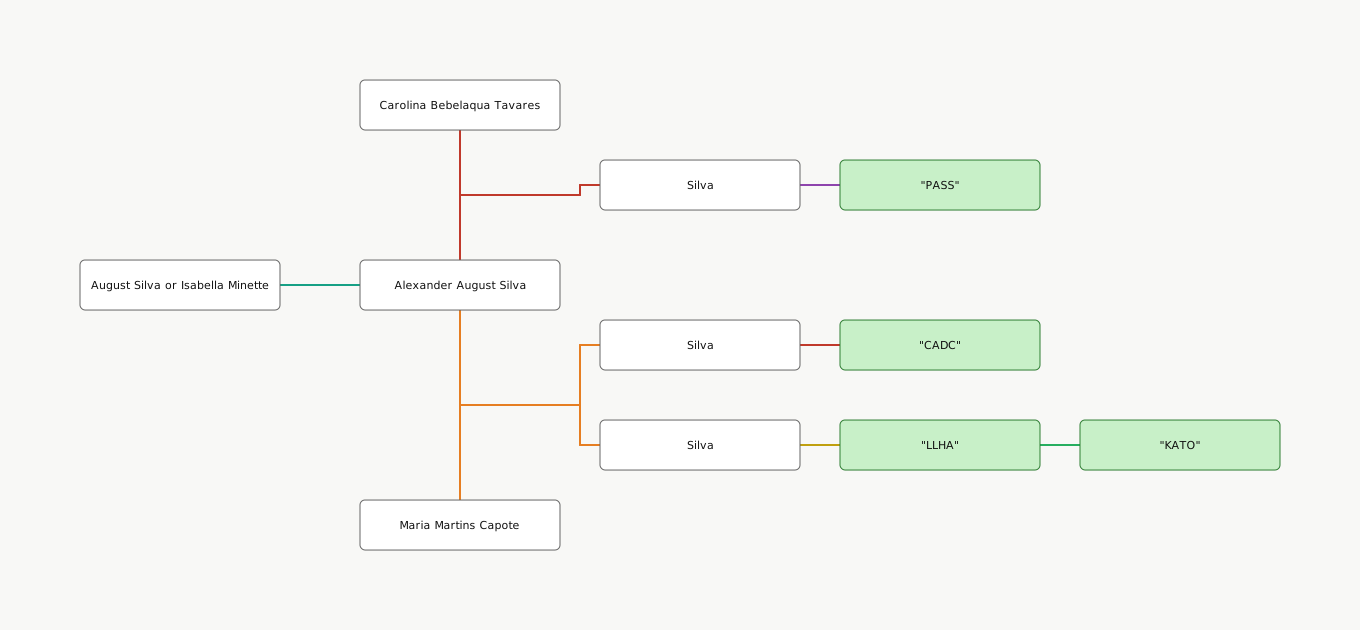
Group 1: Alexander August Silva descendants
The first group all descend from Alexander August Silva (FamilySearch record), who was born in 1879 in Cabo Verde. He married twice and one of the DNA matches descends from his first wife Carolina Taveres, also born in Cabo Verde, while three others in this group descend from his second wife, Maria Martins, born in the Azores.
Alexander left Cabo Verde in 1899 and settled in New Bedford, Bristol, Mass. This town had large population of Cabo Verde and Azores immigrants, driven initially by the whaling industry. Alexander met and married Carolina Bebelaqua Tavares there in 1901 and they moved to Taunton, also in Bristol County. In 1914 he was naturalised as a US citizen, working then as a teamster (a driver of horse-drawn freight wagons). Carolina died in childbirth in June 1918, leaving Alexander with five young children. In October of that year he married Maria Martins Capote, a native of the Azores who had arrived in the USA the previous year. Together they had four children. In the early 1930s the family moved west to Fresno, California where they settled. Maria died in 1966, and Alexander survived her for another eight years, dying in 1974. They were both buried in Holy Cross Cemetery, Fresno.
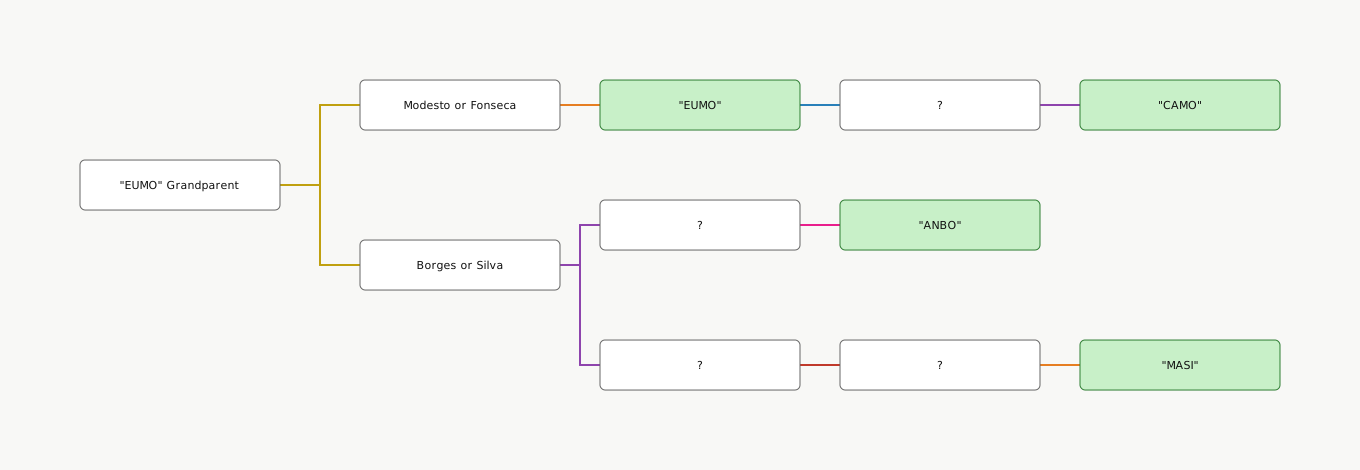
Group 2: “EUMO” grandparent descendants
We haven’t identified the common ancestor of the second group but suggestive surnames are Silva, Fonseca, Lopes, Borges or Modesto. Two of the matches “EUMO” and “CAMO” are directly descended from one another and the other two “ANBO” and “MASI” have a cousin relationship. We haven’t determined the exact relationship between “EUMO” and “ANBO” or “MASI”.
The comparative uncertainty here compared with group one reflects the difficulty of searching the records of Cabo Verde. This group stayed resident in the islands whereas group two migrated to the USA
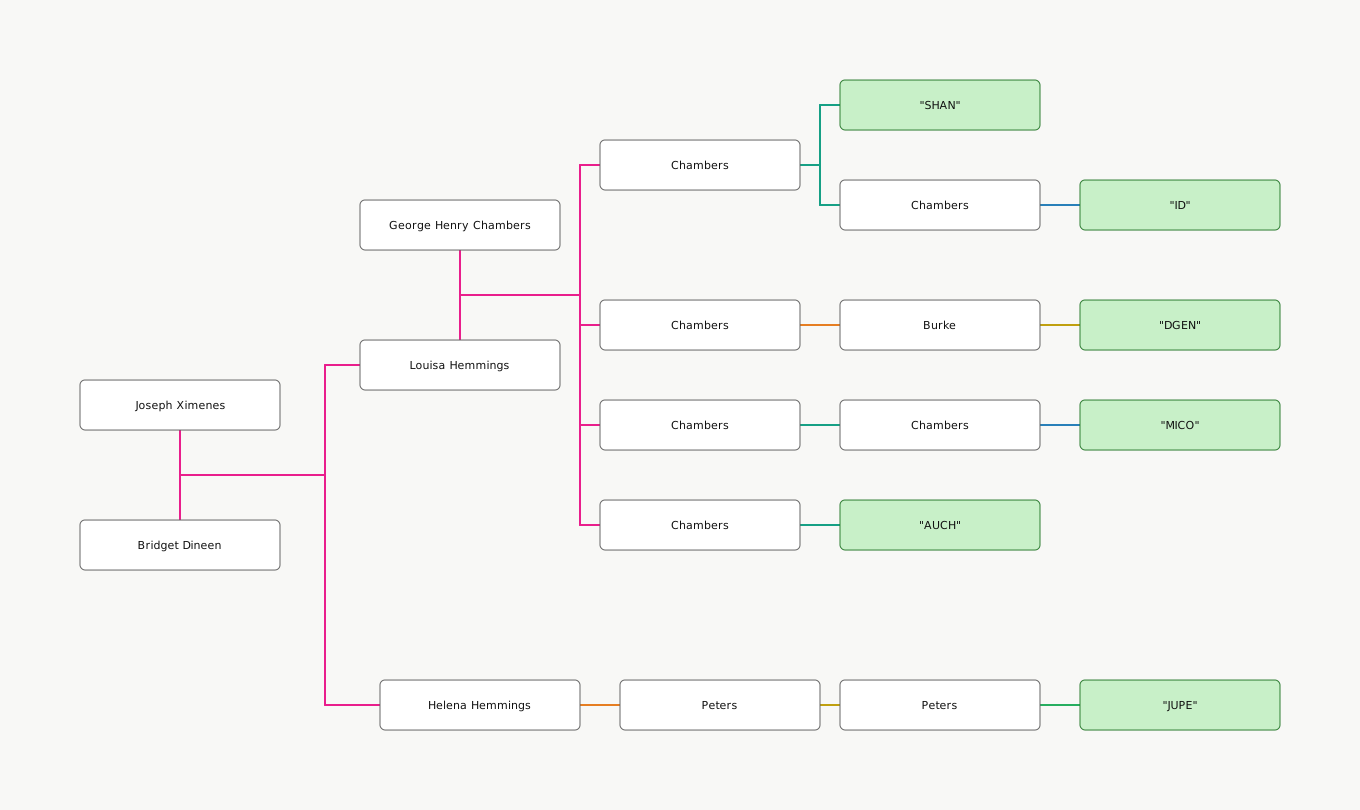
Group 3: Joseph Ximenes descendants
The last group are DNA matches from my own close family that share matches with group one and two. We are all descended from Joseph Ximenes and Bridget Dineen. While we haven’t completely ruled out the DNA connection being via Bridget we think it is highly likely. We have identified DNA matches descended from Bridget and her second husband Daniel Palmer and none of these appear to match with anyone in group one or two.
Where in Cabo Verde are the matches from?
The Cabo Verde archipelago is divided into two main groups based on their position relative to the prevailing northeast trade winds:
Barlavento (Windward Islands) is the northern group, which catches the wind first. These are Santo Antão, São Vicente, Santa Luzia, São Nicolau, Sal, and Boa Vista.
Sotavento (Leeward Islands) is the southern group, more sheltered from the winds. These are Maio, Santiago (the largest island and home to the capital, Praia), Fogo, and Brava.
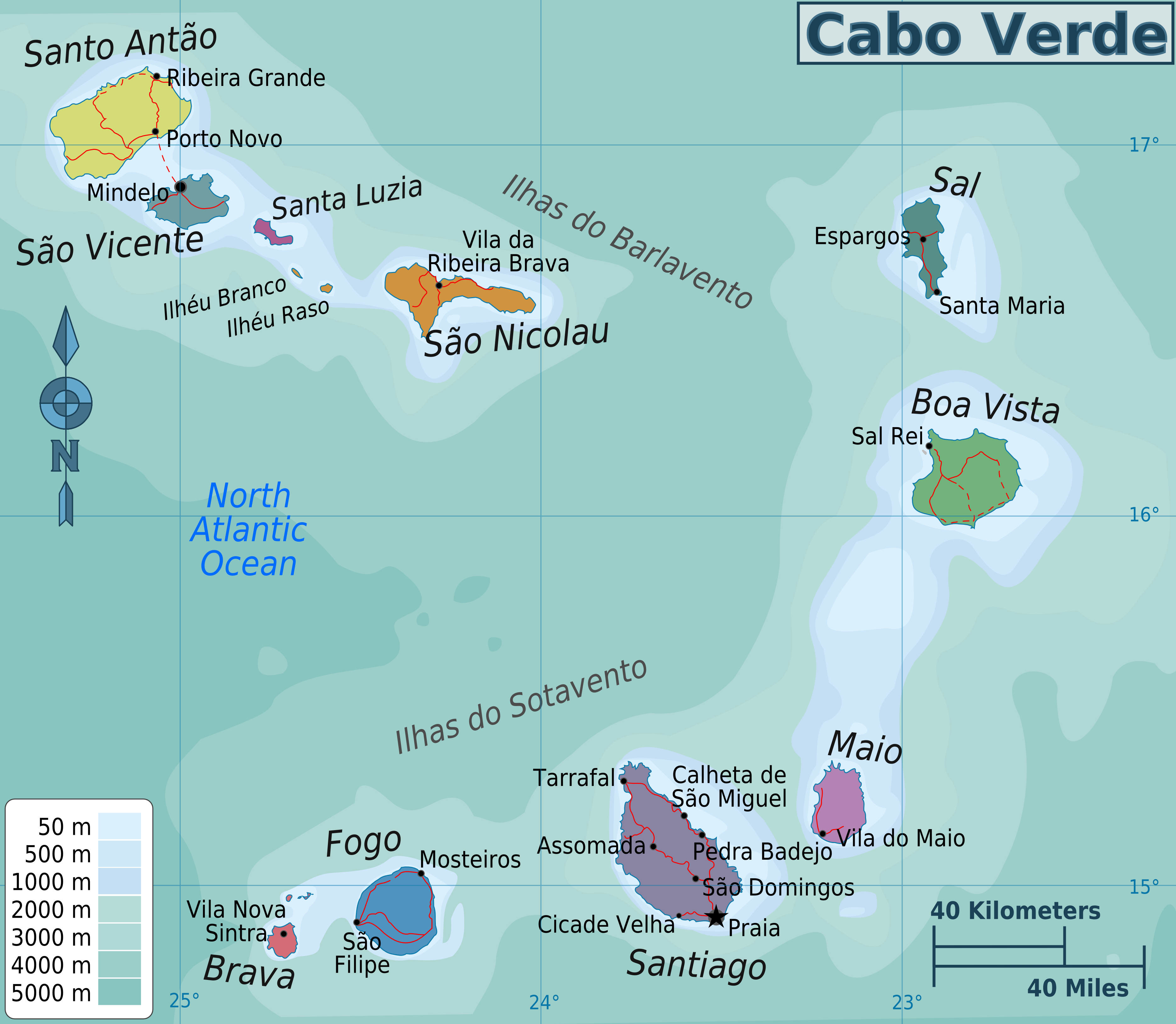
Alexander August Silva was born on the island of Santo Antão in 1879. Although his baptismal record is in a section of the register that is missing, he states his place and date of birth on his 1914 naturalization petition. His first wife was from the island of Brava though we believe they married in New Bedford.
Both of the parents of “EUMO” were born on Santo Antão and at least one of “EUMO”’s grandparents was born there. It seems likely that “ANBO”’s grandparent was born on that island. One of “MASI”’s parents was born on São Vicente in Mindelo.
Notably the adjacent island of São Vicente was the site of a British coal depot at Mindelo which was serviced by ships from Newport, Monmouthshire which is where Joseph Ximenes met and married Bridget Dineen. This is one possible route for him to have arrived in Wales.
Relationship Analysis using BanyanDNA
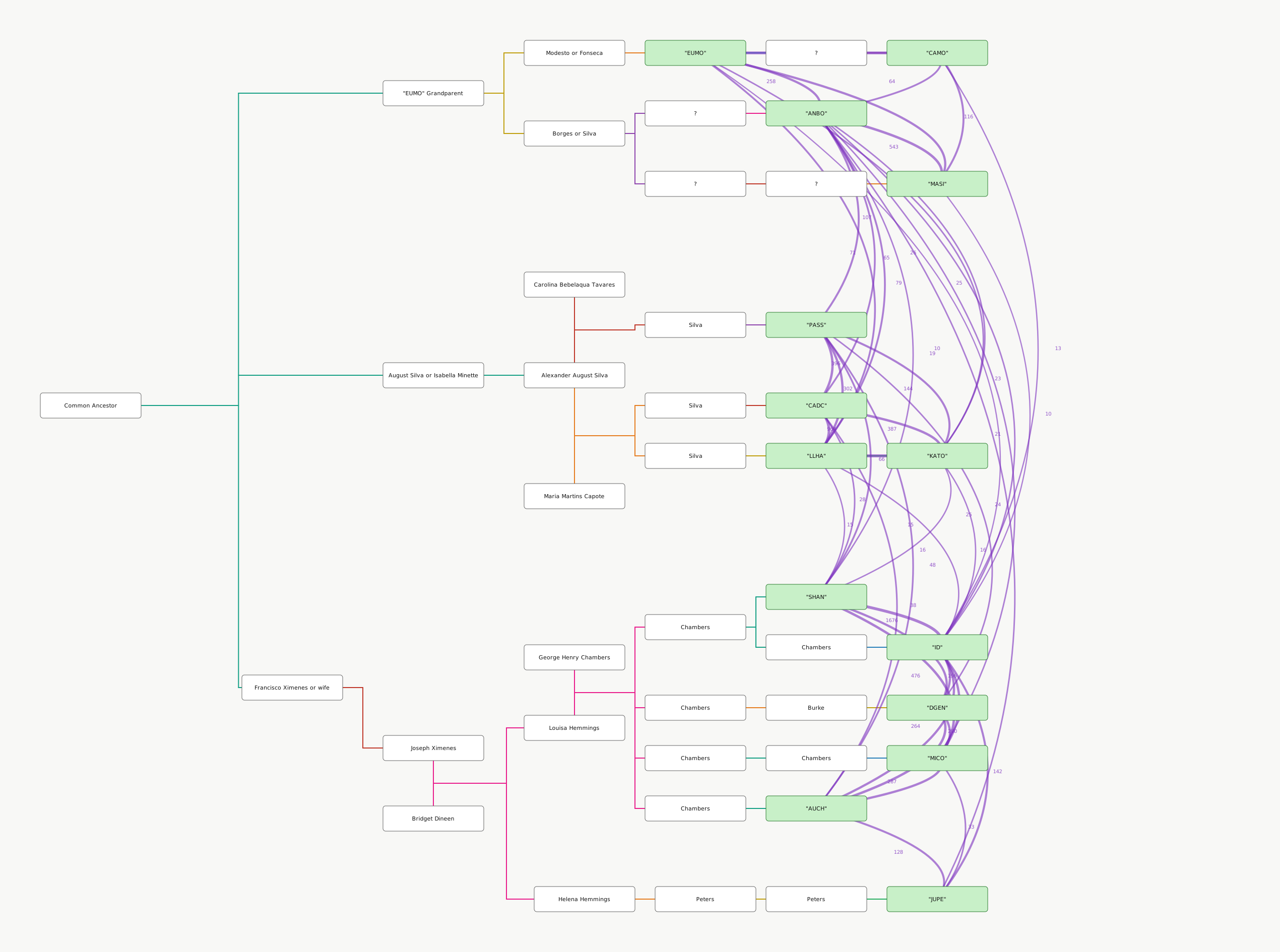
This matrix shows the centimorgans of DNA shared between the DNA test takers in the three groups. Group one is highlighted in blue, group two in purple. As can be seen the amount of shared cM is not high and on their own it would be difficult to infer any particular common ancestor. However, given the interconnected groups it gives more credence to their being a common ancestor for all the people tested.
| ANBO | AUCH | CADC | CAMO | DGEN | EUMO | ID | JUPE | KATO | LLHA | MASI | MICO | PASS | SHAN | |
|---|---|---|---|---|---|---|---|---|---|---|---|---|---|---|
| ANBO | — | 65 | 64 | 258 | 23 | 24 | 25 | 79 | 543 | 21 | 107 | 19 | ||
| AUCH | — | 38 | 468 | 264 | 128 | 287 | 48 | |||||||
| CADC | 65 | 38 | — | 387 | 964 | 396 | 28 | |||||||
| CAMO | 64 | — | 1790 | 13 | 116 | |||||||||
| DGEN | 468 | — | 196 | 280 | 25 | 243 | ||||||||
| EUMO | 258 | 1790 | — | 10 | 26 | 71 | 243 | |||||||
| ID | 23 | 264 | 13 | 196 | 10 | — | 142 | 16 | 16 | 10 | 292 | 1676 | ||
| JUPE | 24 | 128 | 142 | — | 33 | |||||||||
| KATO | 25 | 387 | 26 | 16 | — | 3475 | 144 | 15 | ||||||
| LLHA | 79 | 964 | 71 | 16 | 3475 | — | 302 | 15 | ||||||
| MASI | 543 | 116 | 243 | 10 | — | |||||||||
| MICO | 21 | 287 | 280 | 292 | 33 | — | 476 | |||||||
| PASS | 107 | 48 | 396 | 25 | 144 | 302 | — | 66 | ||||||
| SHAN | 19 | 28 | 243 | 1676 | 15 | 15 | 476 | 66 | — |
BanyanDNA is a tool that helps genealogists confirm family relationships using DNA data. It runs thousands of simulations to estimate how much DNA relatives in a family tree should share, then compares those predictions against real DNA results. This can highlight potential errors in a tree such as a relationship that doesn’t quite add up biologically and help place unknown individuals into an existing family. The results are presented as a simple score that makes it easy to compare different versions of a tree and home in on the most likely family structure.
Once the centimorgan values are entered the tool makes it easy to reconfigure with different possible arrangements of common ancestors and then validate that the dna amounts shared correspond to the expected ranges for each relationship. This process is inherently uncertain because the ranges of shared DNA vary a lot and any particular value could be accurate for a number of different relationships such as 3rd cousin or 2nd cousin once removed.
That the three groups are densely connected can be seen in this diagram. Each purple arc links two DNA test takers who have been found to share some quantity of DNA.
Hypotheses
These hypothesis are the arrangements that best fit the evidence as analysed by BanyanDNA. There are other possibilities that fit but leave certain relationships as out of the usual spread of shared DNA. Since inheritance of DNA is probabilistic and we are dealing with very small amounts (1-3 shared segments, 10-60 cM) there can be a lot of variability in the solutions.
Since the Ximenes/Jimenez doesn’t appear in any other group’s tree as far as we can determine we can probably conclude that any relationship between the groups is via Joseph’s mother and our goal has to be to determine her surname. These hypotheses may help us narrow the search.
Additionally, since group1 is firmly rooted in Cabo Verde and group2 is highly likely to originate there or the Azores, we can probably assume that Joseph’s mother was of this descent also.
Hypothesis 1
This is a straightforward set of relationships where the common ancestor of all three groups is a grandparent of Joseph Ximenes, Alexander August Silva and a parent of the “EUMO” grandparent.
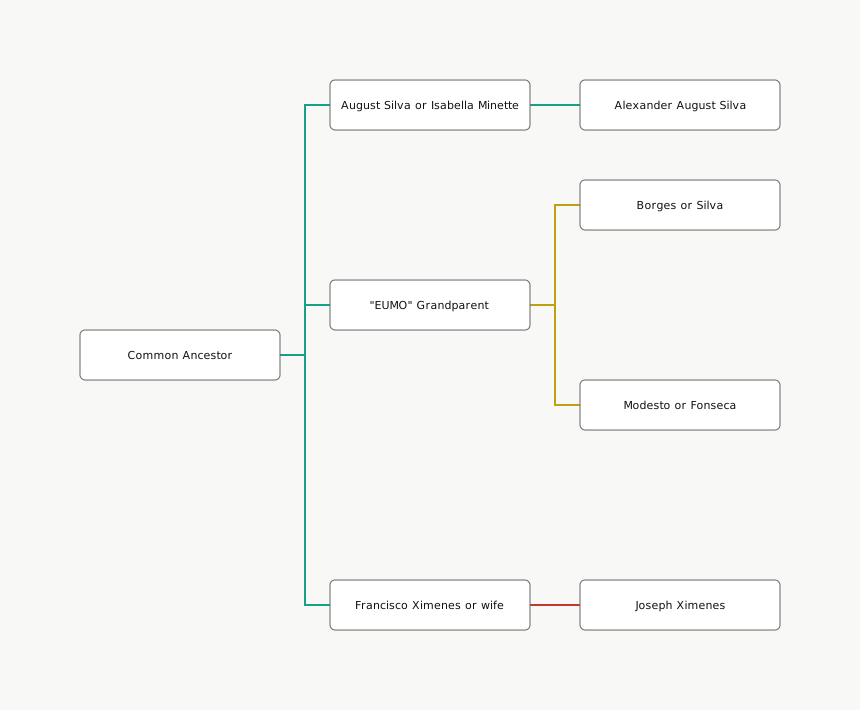
This arrangement has a very strong confidence score (Chi-Square 1.00) with most relationships being within one standard deviation of the expected amount of shared DNA and all are within 1.5 standard deviations. The only real outlier is:
- “ANBO” and “EUMO” as 1st cousins 1x removed should be expected to share 300 - 576 cM, but share less at 258
However there is a very serious problem. According to our research “EUMO” grandparent was born any time between 1874 and 1891. This arrangement makes him a full sibling of Francisco Ximenes who must have been born no later than c.1820 since Joseph was born c.1840. This is a 54 year gap between full siblings, making this an impossible configuration. The dates of birth of “EUMO” grandparent are very tentative but the next generation were firmly born in the early 1900s, so 1874 or earlier is certainly possible.
Hypothesis 2
Here Joseph Ximenes, and the “EUMO” grandparent are full siblings, and the common ancestor is their grandparent. One of August Silva or Isabella Minette are a child of the common ancestor and a full sibling with one of Joseph’s parents.
“EUMO” grandparent could be a child of Francisco Ximenes and another partner or of Joseph’s mother and another partner.
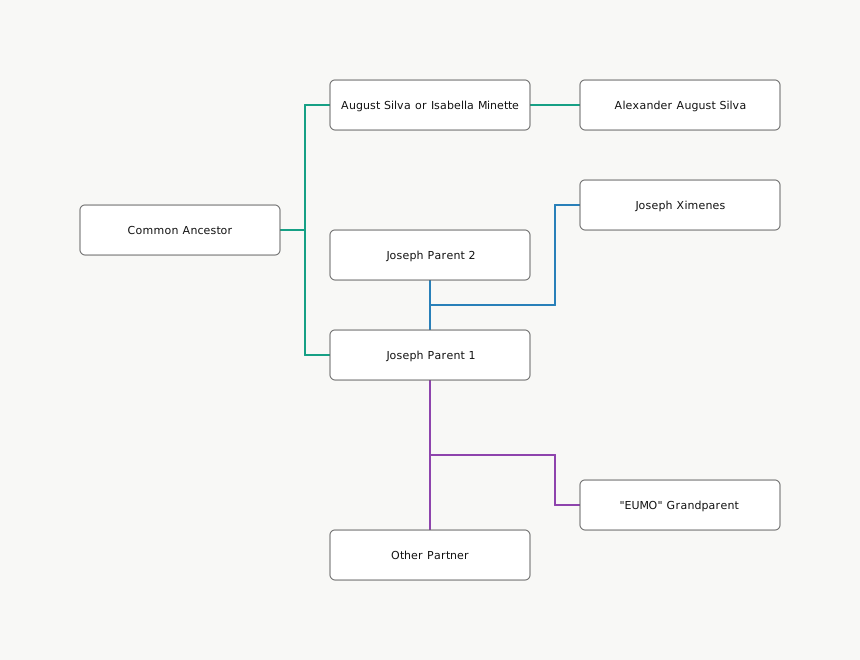
This arrangement has a strong confidence score (Chi-Square 0.98) with most relationships being within one standard deviation of the expected amount of shared DNA and most are within 1.5 standard deviations. Notable outliers:
- “ANBO” and “PASS” here are 3rd cousins 1x removed can be expected to share 2-59 cM, but share 107, implying a closer relationship by at least a generation
- “ANBO” and “LLHA” also 3rd cousins 1x removed expected 2-29 cM but share 79.
These perhaps hint at a closer undiscovered relationship between"ANBO" and Alexander Silva, perhaps a second line of descent. This could explain why “ANBO” shares DNA with so many others across the groups.
This arrangement still strains credibility since it places a 34 year gap between children of the shared Joseph parent. If this was his mother then that puts her at the extreme bounds of child bearing age. His father could more plausibly father children with that age gap.
If the shared parent was Joseph’s mother then she might have one of the surnames associated with “EUMO” grandparent: Silva, Modesto, Livramento, Lopes or, possibly, Borges.
The common ancestor could have any of those surnames and Ximenes or Minette.
Hypothesis 3
Here the common ancestor is actually one of Joseph’s parents. “EUMO” grandparent and one of August Silva or Isabella Minette are siblings. Joseph is their half sibling.
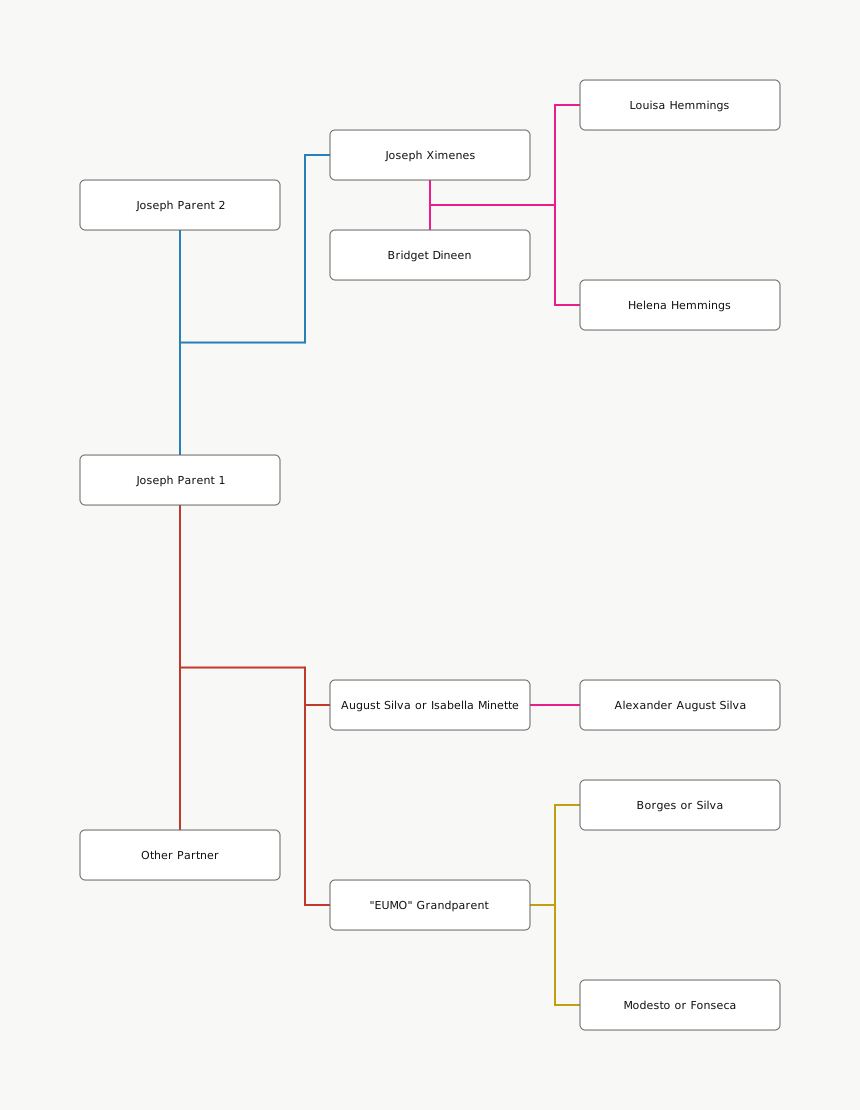
This arrangement has a very strong confidence score (Chi-Square 1.00) with most relationships being within one standard deviation of the expected amount of shared DNA and all with 1.5.
It still has the 34 year gap between children of the shared Joseph parent. One possible scenario is that Joseph’s mother married Franscisco Ximenes young, perhaps 14 and Joseph was her first child in 1840. Franscisco dies some time before c.1850 and she remarries and gives birth to August Silva or Isabella Minette around that time and “EUMO” grandparent in 1874 at age 48.
This suggests that Joseph’s mother might have married a Silva or a Minette, more likely a Silva due to names in group two. It doesn’t give us a clue to her name though.
Hypothesis 4
This is a variation of Hypothesis 3 that introduces a generation between Joseph’s parents and “EUMO” grandparent. This makes Joseph, August/Isabella and the new group 2 ancestor half siblings. The next generation all have consistent birth years: Louisa Hemmings 1876, Alexander Silva 1879 and “EUMO” grandparent perhaps around 1874.
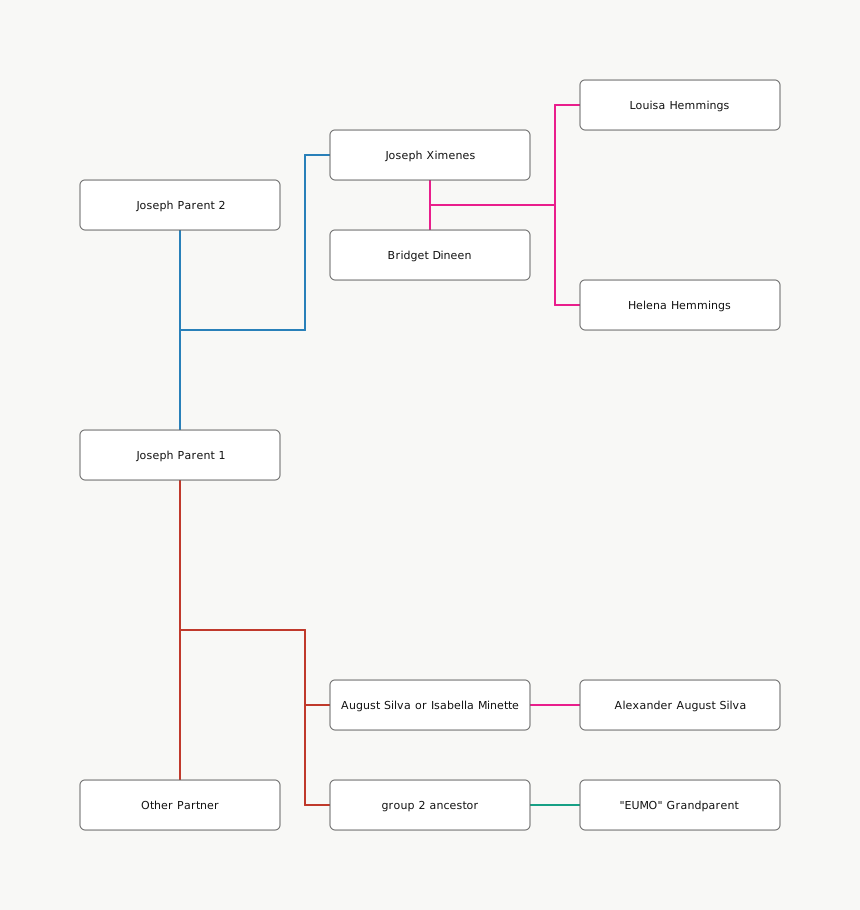
This arrangement has a fairly strong confidence score (Chi-Square 0.97) but the lowest of all the hypotheses despite the dates of birth being the most consistent. The notable outlier is:
- “ANBO” and “PASS” here, as in Hypothesis 2, are 3rd cousins 1x removed can be expected to share 2-59 cM, but share 107.
With another new ancestor in the mix the chance to determine a surname for Joseph’s mother becomes even harder.
Multiple lines of descent?
It’s possible that DNA matches with unexpectedly large cM shared with us or with a large number of common DNA matches may have multiple lines of descent.
One possibility is “PASS” who shares 66 cM with my aunt while their cousins share 15-28. This may indicate another connection on “PASS”’s maternal line and indeed they do trace back to American settlers from Scotland and Ireland in the early 1700s.
Another is “ANBO” who shares DNA with almost everyone in all three groups. Perhaps there is another connection via Silva or even via an Irish ancestor.
Possible research avenues
- Investigate the group 2 tree to pin down names of “EUMO” grandparent and their parents (we do have a good idea of the grandparent namesm but they are not confirmed with clear evidence)
- Investigate the origins and parents of August Silva. We believe he was born in Cabo Verde or possibly in the Azores. However records in those areas of the period 1840-1860 are difficult to access.
- Investigate the origin and parents of Isabella Minette. All searching so far has turned up no trace of her. Minette may me a mis-spelling of her name. We only know of her name from Alexander Silva’s marriage to Maria Martins in 1918 where he records her name as Isabella P. Minette.
- Find Alexander’s marriage certificate to Carolina Tavares which may have another version of Isabella’s name
- Find Alexander’s baptism record in Santo Antão, Cabo Verde. Unfortunately the pages for 1879 appear to be missing, though they may be simply misplaced in the records.
- Look for evidence of Ximenes or Jimenez marriages in Cabo Verde or the Azores. Joseph’s mother may have hailed from these islands (which would help explain the large number of distant Azores DNA matches we have found). Francisco may have met her in New Bedford or he may have travelled to Cabo Verde.
- Investigate other DNA matches that connect to these groups but have not been placed in a definite connection (“MIME”, “DESM” and “HEDC”)
- Test further members of the Chambers family or request access to existing members DNA tests to uncover more matches.